

The difference between INSPIRA ART500 and ECMO
What Differentiates INSPIRA™ ART from ECMO?
Forward Looking Statement
This presentation contains express or implied forward-looking statements pursuant to U.S. Federal securities laws. For example, the Company is using forward-looking statements when it discusses the advantages and benefits of the INSPIRA ART over ECMO, and the market potential of the INSPIRA ART. These forward-looking statements and their implications are based on the current expectations of the management of the Company only and are subject to a number of factors and uncertainties that could cause actual results to differ materially from those described in the forward-looking statements. Except as otherwise required by law, the Company undertakes no obligation to publicly release any revisions to these forward-looking statements to reflect events or circumstances after the date hereof or to reflect the occurrence of unanticipated events. More detailed information about the risks and uncertainties affecting the Company is contained under the heading “Risk Factors” in the Company’s Registration Statement on Form F-1 filed with the SEC, which is available on the SEC’s website, www.sec.gov.
INSPIRA™ ART Vs. ECMO
- Patient population
- Cannulation
- Mechanical design of device and cannula
- Patient sedative state
- Ventilator induced lung injury
- Hospital’s prior experience with ECMO
- Market size
What is ECMO (Extracorporeal Membrane Oxygenation)?
Extracorporeal Membrane Oxygenation (ECMO) is a life support machine.
People who need ECMO have a severe and lifethreatening illness that stops their heart or lungs from working properly.
For example, ECMO is used during life-threatening conditions such as severe lung damage from infection, or shock after a massive heart attack¹.
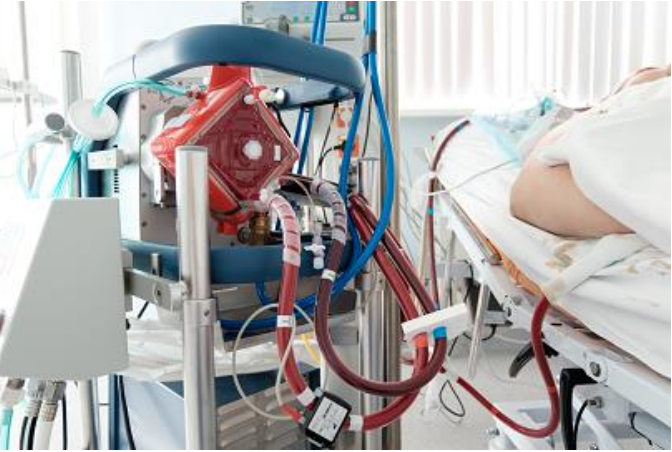
1. Am. J Respir Crit Care Med Vol. 193, P9-P10, 2016 Online version updated March 2020 ATS Patient Education Series © 2016 American Thoracic Society
INSPIRA™ ART System Vs. ECMO: The Patients’ Level of Severity
ECMO* |
INSPIRA ART System |
|
ECMO is a salvage therapy
VV-ECMO¹ is used when all other forms of lung support have failed for critically ill patients |
INSPIRA ART has the potential to prevent invasive mechanical
INSPIRA ART might be applied in (1) patient prior invasive mechanical ventilation, to avoid MV, and (2) in addition to MV to decrease MV duration and subsequent ventilator associated lung injury |
|
There is no “plan B ”when a patient is not improving with
VV-ECMO is considered a “bridge to nowhere ”if a patient |
INSPIRA ART is designed to allow for early intervention
In the case patient deteriorates while receiving INSPIRA ART |
1. Venovenous (VV) ECMO provides lung support only, so the patient’s heart must still function well enough to meet the body’s needs. Two cannulas are
placed into veins in spots close to or inside the heart.
2. INSPIRA ART Treatment – Early extracorporeal blood oxygenation with 1-1.5 liters of blood.
* ELSO website – https://www.elso.org/Resources/TypesofECMO.aspx
https://www.elso.org/Portals/0/ELSO%20Guidelines%20General%20All%20ECLS%20Version%201_4.pdf (Accessed on July 23, 2018)
INSPIRA™ ART System Vs. ECMO: Cannulation
ECMO* |
INSPIRA ART System |
|
Two single lumen cannulas Typically, two large (21-25 fr) single lumen cannulas are used to withdraw and return 5-7 liters of blood per minute.
(Commercially available dual lumen cannulas are relatively new, and extremely expensive) |
One dual lumen cannula One (16-21 fr**) dual lumen cannula, will be used to withdraw and return 1-1.5 liters of blood per minute. |
|
Increased probability of bleeding and infection
|
Reduced probability of bleeding and infection
|
* https://www.elso.org/Portals/0/ELSO%20Guidelines%20General%20All%20ECLS%20Version%201_4.pdf (Accessed on July 23, 2018)** The diameter of the cannula depends on the flow volume required to perform the treatment. As the volume of flow decreases, the cannula diameter is reduced accordingly
INSPIRA™ ART System Vs ECMO: Safety Optimization of Low Blood Flow
ECMO* |
INSPIRA ART System |
|
A high flow device is not designed to support low flow treatment
ECMO treatment cessation, is characterized by short duration of low blood flow during weaning process
In many ECMO centers ,low flow duration (as part of ECMO weaning process) is minimal ,as clinicians assume the probability for clotting events increases dramatically¹,²
Cannuals, pump, pump head and oxygenator utilized with regular ECMO, are less suitable for low flow treatment and may put the patient in danger |
INSPIRA ART is designed to optimize the effectiveness profile of low flow extracoporeal treatment
How do we aim to increase the devices ’safety profile?
Hemolysis –breakdown or destruction of red blood cells so that the contained oxygen carrying pigment hemoglobin is freed into the surrounding medium |
* https://www.elso.org/Portals/0/ELSO%20Guidelines%20General%20All%20ECLS%20Version%201_4.pdf (Accessed on July 23, 2018)
1. Ki, Katrina K., et al. “Low flow rate alters haemostatic parameters in an ex-vivo extracorporeal membrane oxygenation circuit.” Intensive care medicine experimental.1-15 :)2019(7.1
2. Broman, Lars M., et al. “Weaning from veno-venous extracorporeal membrane oxygenation: how I do it.” Journal of thoracic disease .692S :)2018(5 lppuS.10
INSPIRA™ ART System Vs. ECMO: Sedation & Paralysis
ECMO* |
INSPIRA ART System |
|
Patients are sedated and paralyzed Patients are mechanically ventilated, sedated and paralyzed when ECMO is first administered
“Awake ECMO ”is an off-lable, non prevalent event as clinicians wish to prevent cannulas dislocation which might result in massive bleeding & death
|
Patients are awake and spontaneously breathing
|
* https://www.elso.org/Portals/0/ELSO%20Guidelines%20General%20All%20ECLS%20Version%201_4.pdf (Accessed on July 23, 2018)
INSPIRA™ ART System Vs. ECMO: Ventilator Induced Lung Injury
ECMO* |
INSPIRA ART System |
|
Ventilator induced lung injury is highly prevalent
Patients are mechanically ventilated prior to ECMO administration, as well as during ECMO treatment period |
Patients may be awake and spontaneously breathing INSPIRA ART may potentially prevent MV
Prevention of:
|
|
INSPIRA ART may be added to mechanically ventilated patients to shorten ventilation duration and reduce MV damage to the lung
INSPIRA ART may potentially reduce the duration of MV .
Significant reduction of:
|
* https://www.elso.org/Portals/0/ELSO%20Guidelines%20General%20All%20ECLS%20Version%201_4.pdf (Accessed on July 23, 2018)
INSPIRA™ ART System Vs. ECMO: Hospital’s Prior Experience With ECMO
ECMO* |
INSPIRA ART System |
|
ECMO treatment is limited to hospitals with relevant know how and accumulated experience: ICU physicians, perfusionist and trained ICU nurses must operate and monitor a patient treated with ECMO.
ECMO cannot be operated in the absence of a perfusionist
Perfusionist – operates a heart-lung machine (extracorporeal respiratory system), which is an artificial blood pump, which propels oxygenated blood to the patient’s tissues |
INSPIRA ART design will may potentially eliminate the need for a perfusionist and facilitate its everyday use.
INSPIRA ART would potentially be used in any ICU, with or without prior ECMO experience.
For that reason, the device commercial potential is significantly larger than ECMO’s |
* https://www.elso.org/Portals/0/ELSO%20Guidelines%20General%20All%20ECLS%20Version%201_4.pdf (Accessed on July 23, 2018)
INSPIRA™ ART System Vs. ECMO: The Market
ECMO* |
INSPIRA ART System |
|
The number of patients treated with ECMO is limited:
ECMO’s limited patient population, combined with its high complication rate and its significant financial burden to providers, limit its use |
INSPIRA ART market size may resemble the invasive mechanical ventilation market:
INSPIRA ART’s potential patient population includes all patients considered candidates for MV .INSPIRA ART will potentially allow for an extracorporeal intervention aimed to prevent MV and offer a cost-benefit solution from a payor perspective |
* https://www.elso.org/Portals/0/ELSO%20Guidelines%20General%20All%20ECLS%20Version%201_4.pdf (Accessed on July 23, 2018)


